Seventy-Six Years: Why Is Doctors' Day Also a Humanitarian Question?
Indonesia marks the medical association's 76th anniversary today. At home, doctors are counting smoke-related patients; abroad, they are being attacked at work. Neither fact is ceremonial.
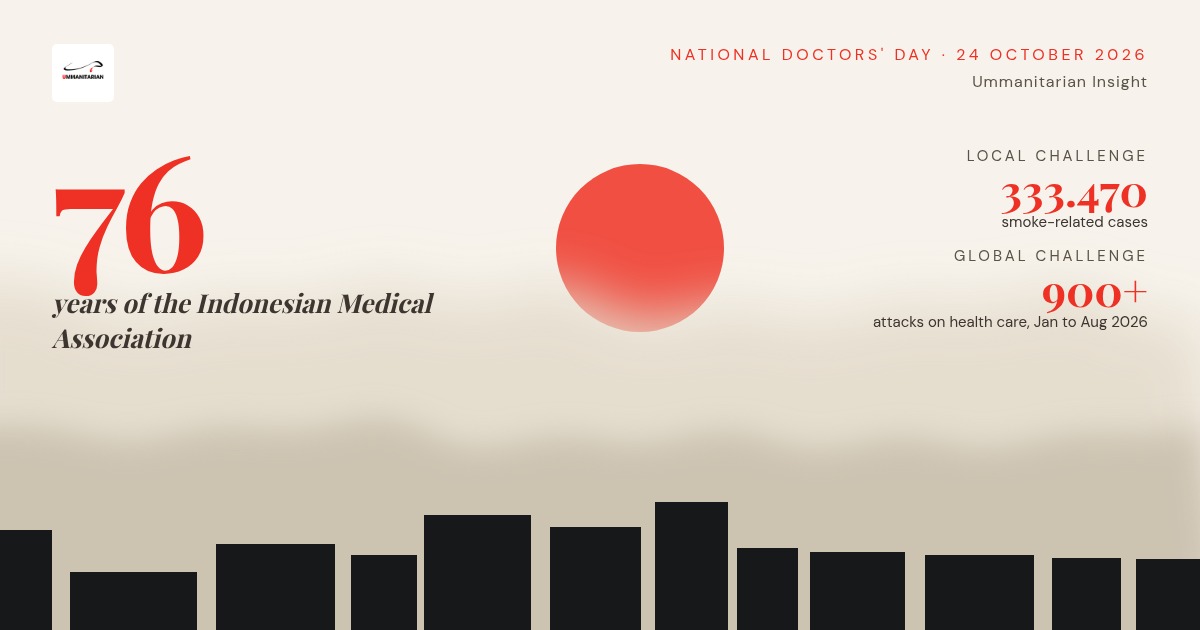
Illustration: Ummanitarian Insight. The local figure is the Ministry of Health count for 18 August to 21 October 2026; the global figure is WHO surveillance reported on 14 August 2026.
On 24 October 2026 the Indonesian Medical Association marks seventy-six years since its founding, and the date is observed as National Doctors' Day. It is usually read as a professional milestone, a morning of greetings from ministries and hospitals. It is also a humanitarian date: the work it commemorates increasingly happens where humanitarian agencies work, in disaster response, in conflict and in districts that no specialist wants to be posted to.
The association began as a legal fact. According to ANTARA, IDI was established on 24 October 1950, five years after the proclamation of independence and months after sovereignty was transferred at the end of 1949. A profession organised in a country short of physicians now spends its anniversary on air quality at home and detained colleagues abroad, which is a change in the job description as much as in the calendar.
The humanitarian frame is not rhetorical. The World Health Organization estimates a projected shortfall of 11 million health workers by 2030, concentrated in low and lower-middle income countries, and names difficulty in attracting staff to rural, remote and underserved areas as one reason the gap persists. In an emergency that shortage is measured in hours rather than years. A doctor working through a fire season is the same profession with less margin.
The local challenge
This year the anniversary falls inside a respiratory emergency. According to figures released through the national disaster agency on 22 October, health facilities recorded 333,470 accumulated cases of acute respiratory infection, known in Indonesia as ISPA, in fire-affected areas between 18 August and 21 October 2026. Of that total, 258,298 were patients aged five and over and 75,172 were children under five. “The spread of recorded cases covers 68 districts and cities in seven provinces,” said Then Suyanti, the ministry's director of environmental health, linking the steep rise to thickening haze.
At the anniversary event, IDI chair Slamet Budiarto said prolonged exposure can produce respiratory and lung infection and, over the long term, cancer, and pointed to air quality in affected cities, including Palembang, as unhealthy to hazardous. He said no significant reports of illness among health workers had reached the association, and that doctors were still seeing patients in masks. The private hospitals association reported outpatient respiratory visits rising, with some hospitals giving multivitamins to their own staff.
The global challenge
Abroad, the threat is deliberate. On 14 August the World Health Organization said it had recorded more than 10,400 attacks on health care across 29 countries and territories since 2018, with about 5,700 deaths and more than 8,000 injuries, and that no one had been held accountable. Between January and August 2026 it counted more than 900 attacks, at least 900 deaths and more than 1,400 injuries, a rate above four a day, most in Ukraine, Lebanon and the occupied Palestinian territory.
WHO records the consequence as lost service. A study of 69 attacks in northwest Syria found outpatient consultations fell 51 per cent the following day and stayed reduced for up to 37 days. In Sudan 37 per cent of assessed facilities were non-functional in 2026; in Gaza all 36 hospitals have been damaged. The agency also recorded 44 incidents of detention of health workers and patients, affecting 94 people.
Two questions follow the greetings, and neither is ceremonial. At home: whether district air readings will be published beside the case counts while the season is still running. Abroad: whether the ten-thousandth attack on a hospital will produce the first prosecution.
In six frames
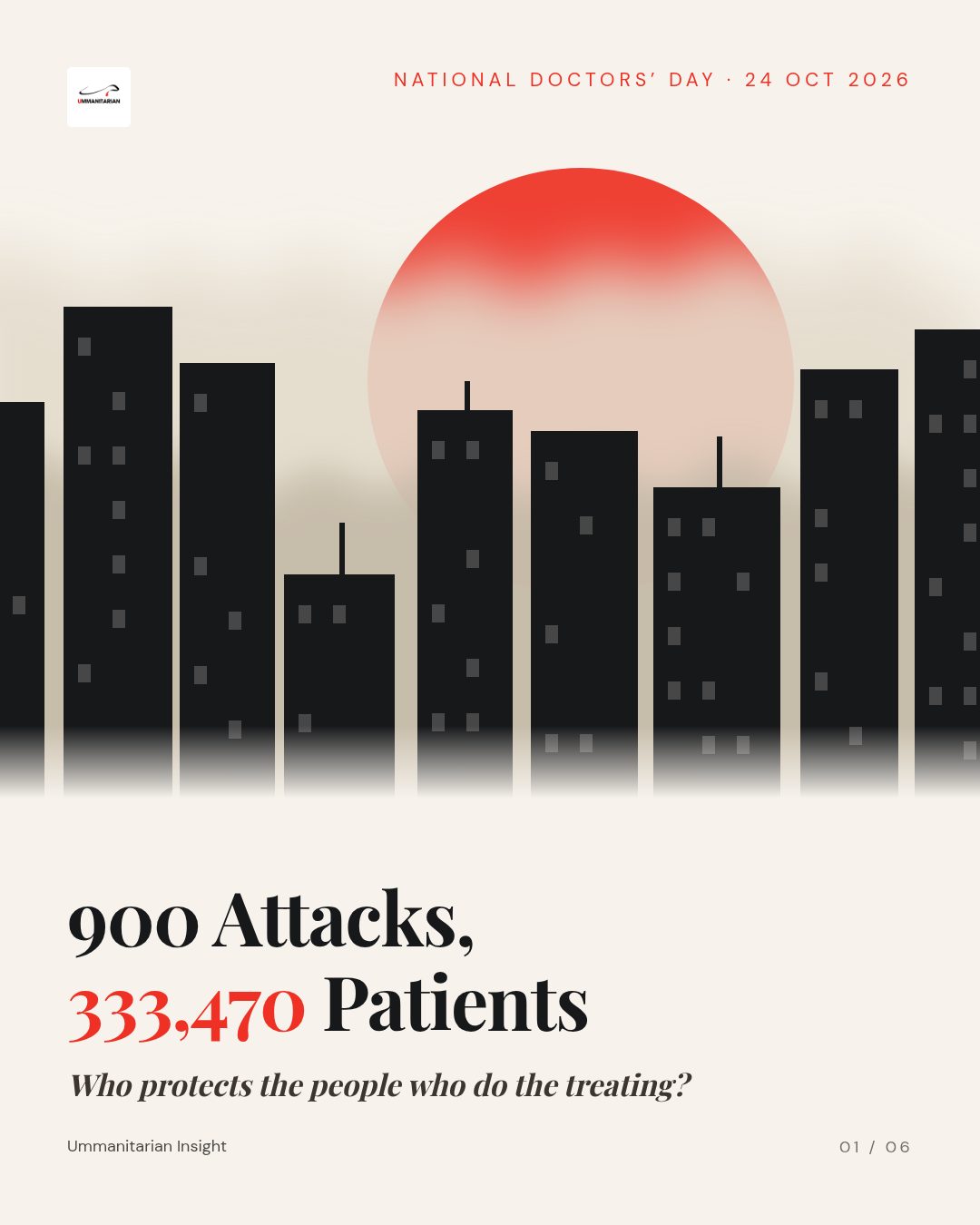
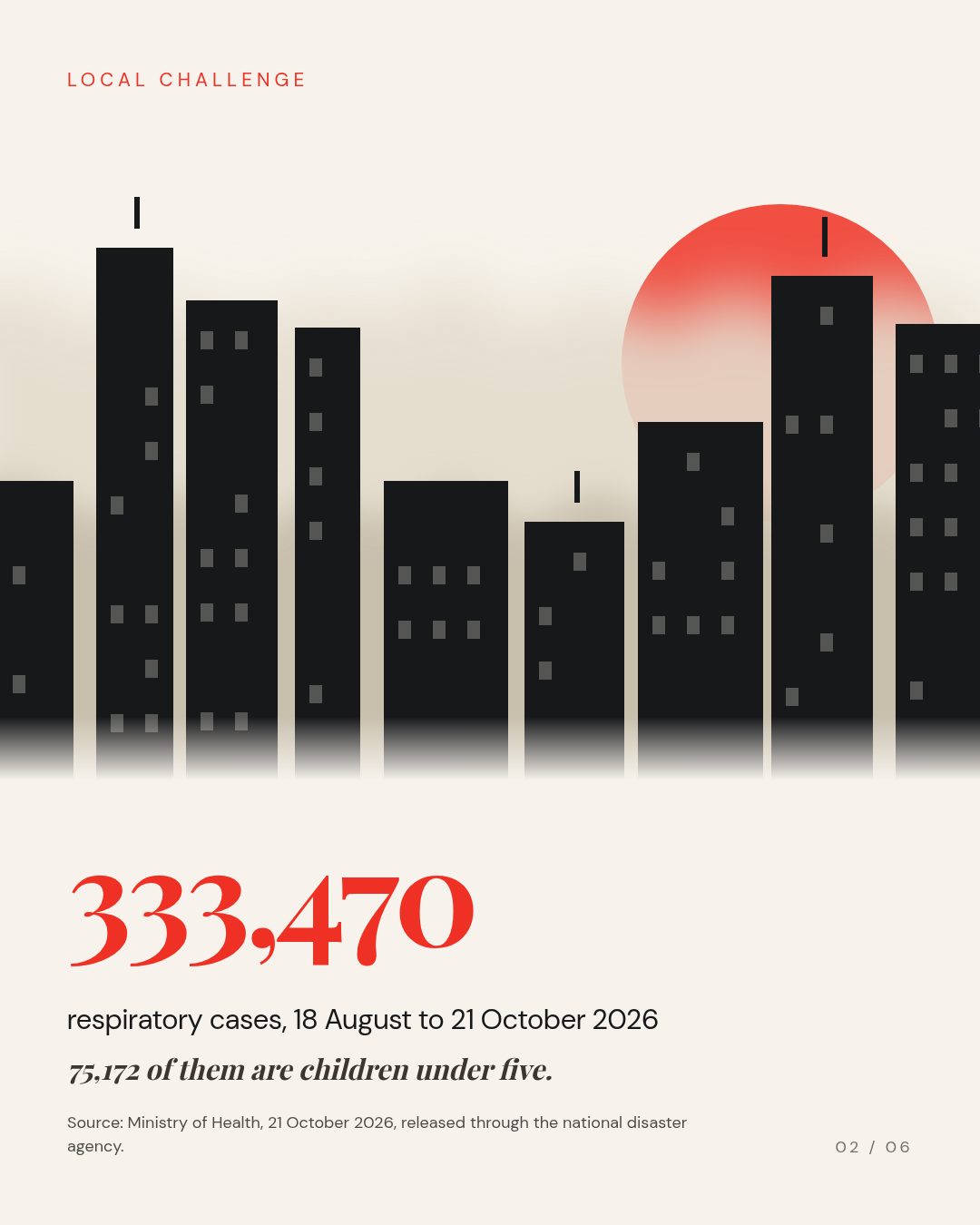
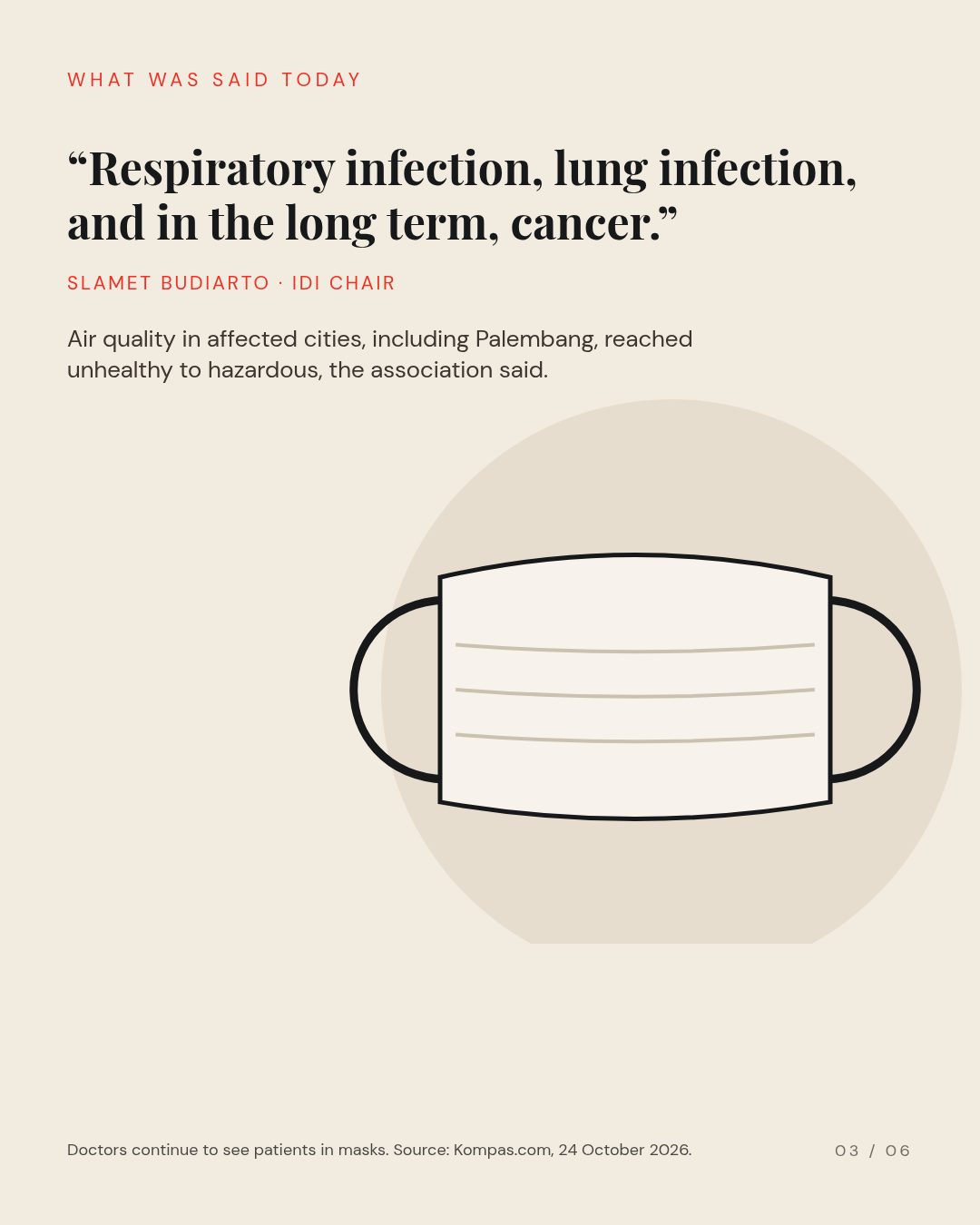
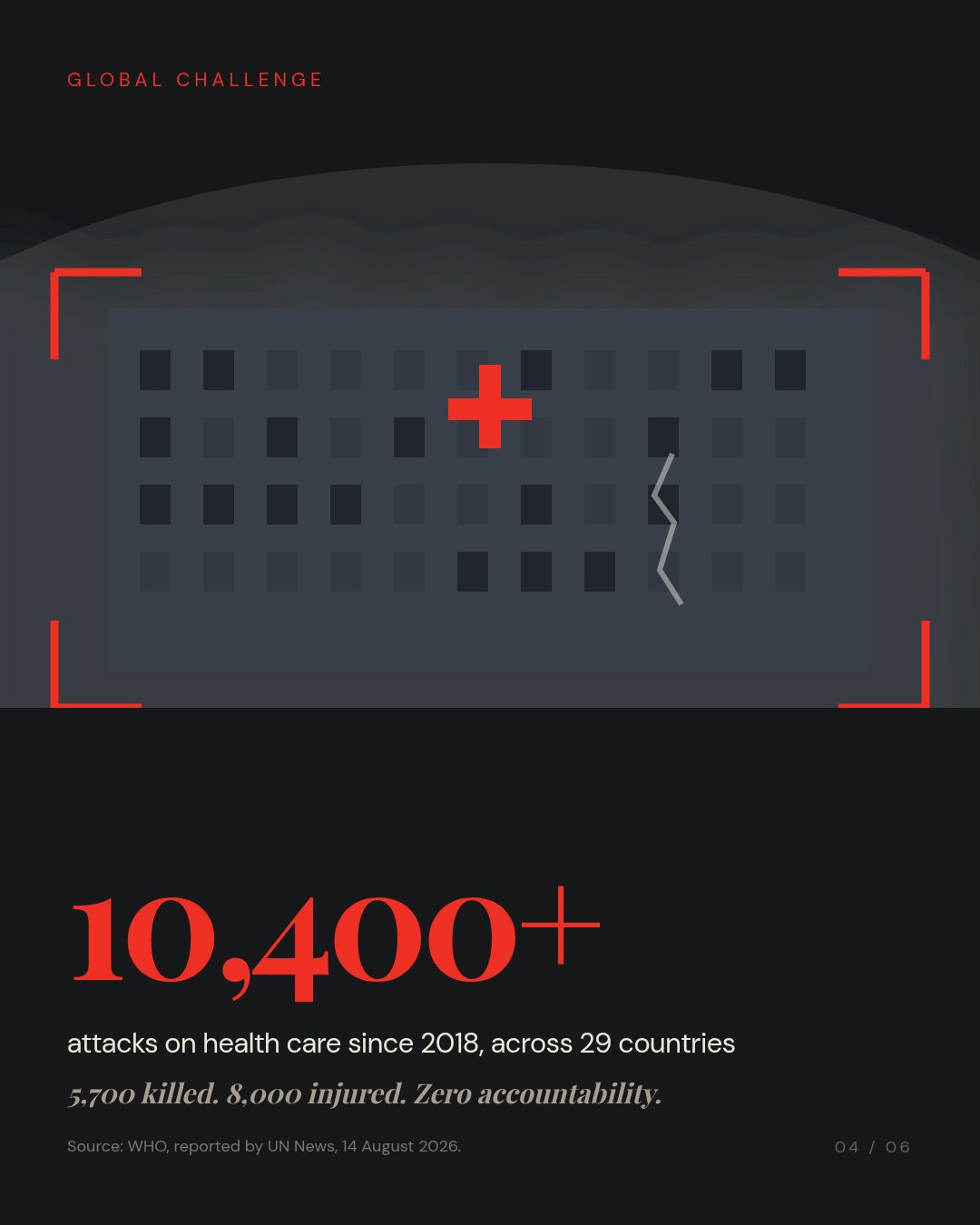
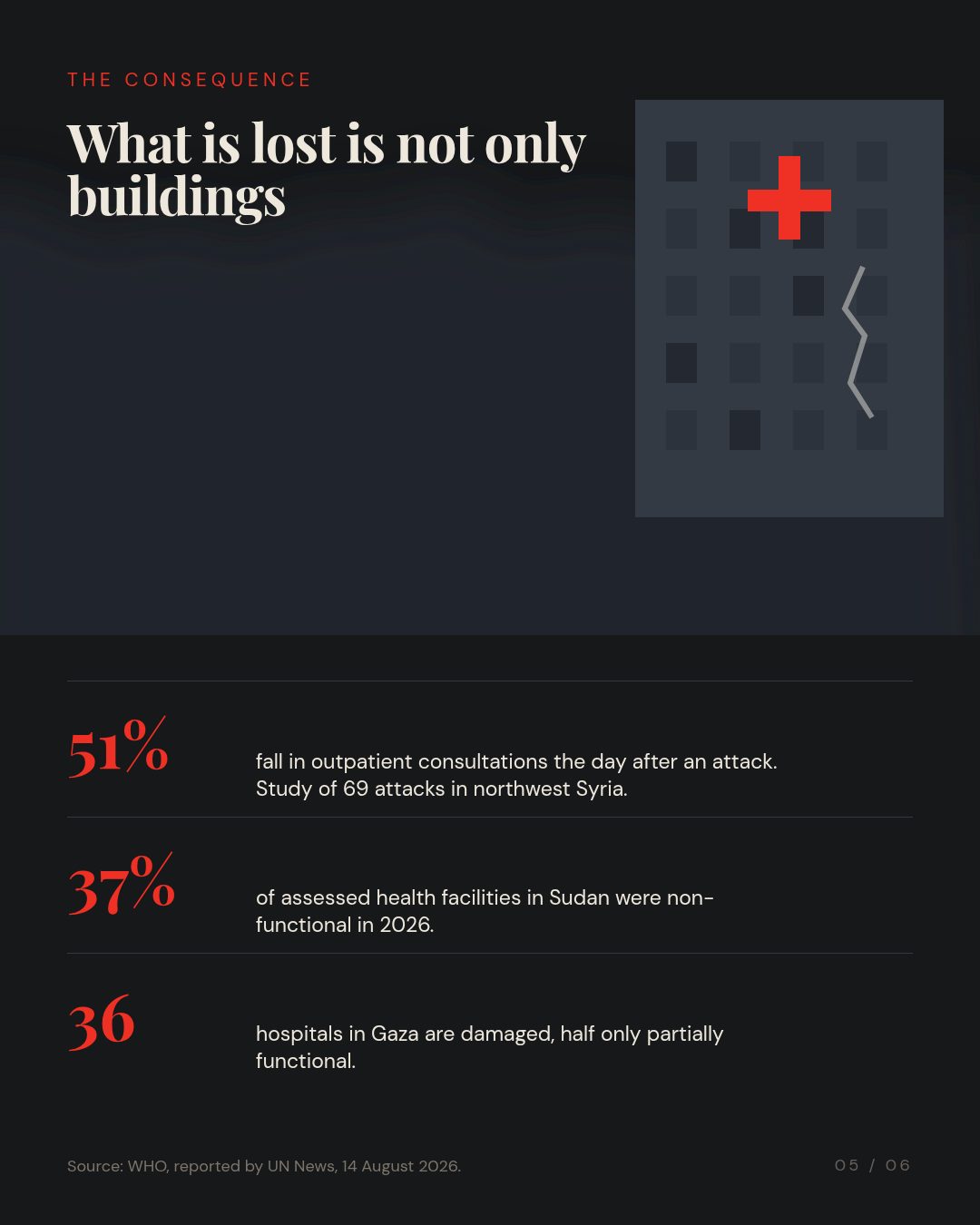
The six frames carry the same figures and sources as the article. Scroll or swipe sideways; frame 6 links to this page.
Indonesian Summary
Pada 24 Oktober 2026 Ikatan Dokter Indonesia menandai 76 tahun berdirinya, dan tanggal itu diperingati sebagai Hari Dokter Nasional. Peringatan ini bukan hanya soal profesi, karena pekerjaan yang dikenang kini banyak berlangsung di wilayah kerja kemanusiaan: respons bencana, konflik, dan daerah yang sulit dijangkau tenaga medis. IDI berdiri 24 Oktober 1950, lima tahun setelah proklamasi kemerdekaan. Badan Kesehatan Dunia memperkirakan kekurangan 11 juta tenaga kesehatan pada 2030 dan menyebut kesulitan menempatkan tenaga di wilayah pedesaan, terpencil, serta kurang terlayani sebagai salah satu sebabnya. Tantangan lokal tahun ini berupa darurat pernapasan: Kementerian Kesehatan mencatat 333.470 kasus ISPA di wilayah terdampak kebakaran hutan antara 18 Agustus dan 21 Oktober 2026, meliputi 68 kabupaten/kota di tujuh provinsi, dengan 75.172 kasus pada anak di bawah lima tahun. Ketua Umum PB IDI Slamet Budiarto menyebut paparan asap berkepanjangan berisiko memicu infeksi pernapasan, infeksi paru, dan kanker. Tantangan globalnya disengaja: WHO mencatat lebih dari 10.400 serangan atas layanan kesehatan di 29 negara sejak 2018, sekitar 5.700 kematian, lebih dari 8.000 cedera, dan belum ada satu pun pertanggungjawaban hukum; sepanjang Januari sampai Agustus 2026 tercatat lebih dari 900 serangan.
ANTARA, Hari Dokter Nasional: Denyut yang menjaga tubuh Republik, 24 October 2026: antaranews.com
World Health Organization, Health workforce fact sheet: who.int
Kompas.com, Data Kemenkes: Kasus ISPA Akibat Asap Karhutla Tembus 333.470, Termasuk 75.172 Balita, 22 October 2026: kompas.com
Kompas.com, Asap Karhutla Tingkatkan Risiko Kanker, Ini Penjelasan IDI, 24 October 2026: kompas.com
Kompas.com, ARSSI Sebut Rawat Jalan Kasus ISPA di RS Swasta Meningkat Akibat Karhutla, 24 October 2026: kompas.com
UN News, An attack on healthcare every six hours, and no one held to account, 14 August 2026, reporting WHO figures: news.un.org
Editorial note: the 333,470 figure is the Ministry of Health count for 18 August to 21 October 2026. Attack figures are WHO surveillance totals reported on 14 August 2026 and cover 2018 to that date. The 11 million projection is WHO's, for 2030.
Humanitarian work is mostly health work conducted under worse conditions. That is why the anniversary belongs in this part of the record rather than only in the greetings: the competencies that treat a child in a smoke-filled district treat one in a displacement camp, and the same failure to protect the person holding the stethoscope removes care from both places. Protection of health care is written into international humanitarian law; enforcement is not, and the count of attacks has run to five figures with a prosecution count of zero.
The domestic version of that gap is quieter and easier to close. Smoke harm is counted afterwards, in clinics, by staff working in masks, while the air readings that would let a school close or a family keep a child home are not published alongside the case count on the same day. Pairing the two records would not stop the fires, but it would shift part of the risk off the person treating patients and back onto the institutions that decide land use.