Gaza: While the World Counts the Dead, They Count Reasons to Keep Living
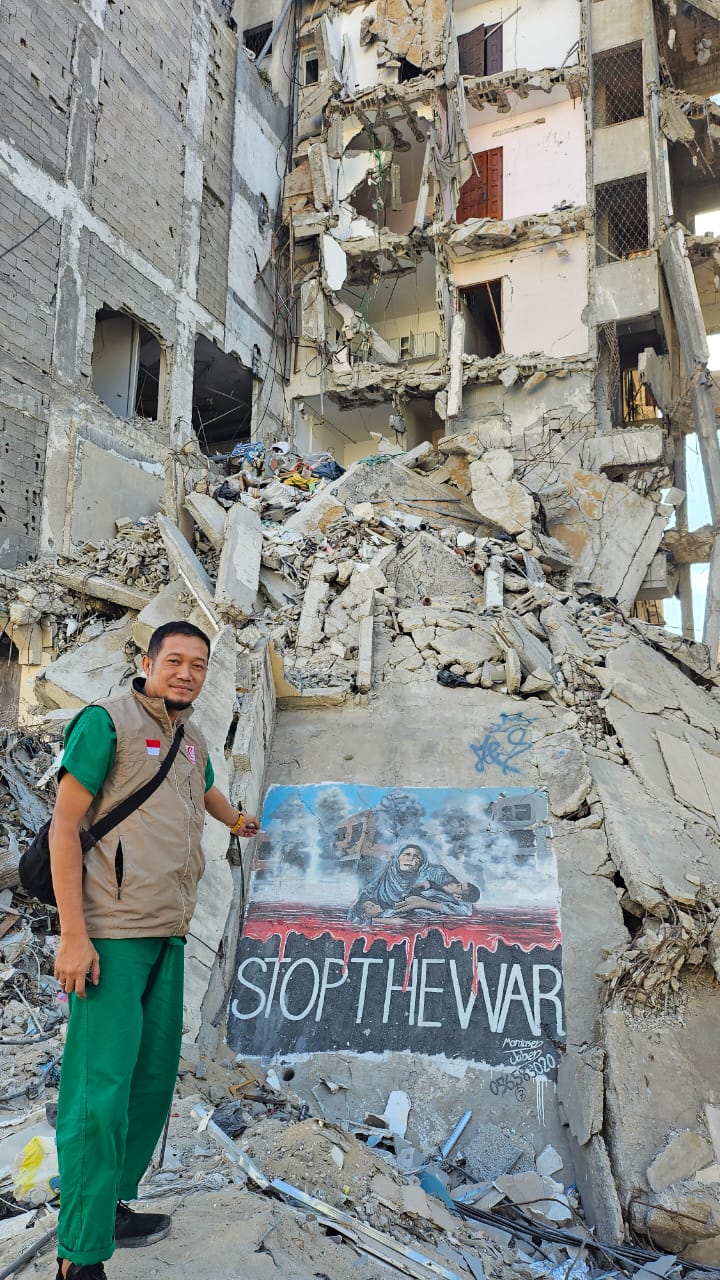
Photo submitted by the contributor, taken in the Gaza Strip. Used with the author's permission.
Across Gaza, the sound of explosions is no longer just emergency news. It has become part of the fabric of daily life. Children learn to tell types of blasts apart before they can read a map of the world. Mothers sleep fully dressed so they can run at any moment. Fathers leave to search for food without ever being certain they will make it home safely.
Yet amid the rubble that fills television screens around the world, one fact rarely makes the headlines: the people of Gaza are still alive — not merely breathing, but continuing to fight to hold on to hope.
For years, the world has come to know Gaza through numbers. Death tolls. Displacement figures. Counts of destroyed buildings. Estimates of humanitarian aid required. New statistics are published every day, and every day those numbers grow. But there is something statistics have never been able to capture: human endurance.
How does a teacher keep teaching when the classroom has been reduced to rubble? How does a health worker keep calming patients when their own family may be the next casualty? How does a child still manage to laugh when the sky — which should be a place to watch stars — has instead become the direction from which danger arrives?
These are the questions that lead us to a word that often sounds simple, yet carries extraordinary weight in the context of war: resilience.
Resilience is not a story about people who never cry. Nor is it a heroic tale free of wounds. Resilience is the capacity to keep standing when life keeps knocking you down. It is the courage to rebuild a home that has been destroyed more than once. It is the decision to keep sending a child to school even when the future looks uncertain. It is the conviction that life must go on, even when the world feels like it is collapsing.
In Gaza, resilience does not grow because people are immune to suffering. Quite the opposite — they know loss intimately. They have come to understand grief earlier than most people elsewhere in the world ever will. But years of enduring conflict have produced a distinct survival mechanism. When institutions collapse, communities step in. When facilities are scarce, solidarity becomes the most valuable currency there is.
It is no surprise, then, that in many corners of Gaza, families who have lost their homes can still find shelter with neighbors. Scarce food is shared among more people. Heavy grief is carried together. In circumstances that, to many outsiders, seem impossible to endure, the people of Gaza show that social resilience can be stronger than concrete and steel.
But there is a danger when the world praises the resilience of Gaza's people too readily. The narrative that "they are strong" can, without anyone intending it, let the world forget that they are also exhausted human beings. They too have limits. They too have the right to live without fear. Resilience is not a reason to let suffering continue. The endurance of Gaza's people must never be used to justify the normalization of conflict — because no human being should be forced to be strong simply because the world has failed to deliver peace.
What cameras often fail to capture is the psychological toll accumulating across generations. Children who grow up in the middle of war carry memories they never chose to have. Many of them know the sound of missiles more intimately than the sound of childhood games. Trauma becomes an inheritance passed quietly from one generation to the next.
Yet even amid these conditions, hope keeps finding a way through. Hope shows up when a teacher opens an emergency classroom inside a displacement tent. Hope shows up when a health worker puts in long hours with no guarantee of their own safety. Hope shows up when a child still writes down their dreams on a scrap of paper salvaged from a destroyed school.
Perhaps this is the greatest lesson Gaza has to offer: that human beings possess an extraordinary capacity to endure, even when every reason to give up seems more rational than the alternative.
The world may see Gaza as a symbol of humanitarian crisis. The world may see it as a conflict zone with no end in sight. But for those who live there, every morning survived is its own small victory. Every smile that still appears is an act of resistance. And every kept hope is proof that war has not yet defeated humanity.
In the end, what keeps Gaza standing is not the walls that remain. Nor is it the aid that arrives from elsewhere. What keeps Gaza standing are ordinary people who choose, every single day, to keep living — even as life keeps testing them.
Because in Gaza, resilience is not merely a concept from a psychology textbook. It is a way of life — a blend of steadfastness and endurance. It is a language understood by every family that has ever known loss. And it is a reminder to the world that even amid the darkest devastation, human beings can still light a flame.
Gaza is small in size, but to this day, despite everything it has endured, it holds on — driven by the will to keep living and to protect a land it holds dear.
Kamal Putra Pratama is a guest contributor to Ummanitarian Insight. He is known as a humanitarian medical volunteer who has served directly in the Gaza Strip, as reported by Media Indonesia. This essay was written from his personal observations and experience in the field, and is published as a contributor's perspective — not an editorial report by Ummanitarian Insight.